
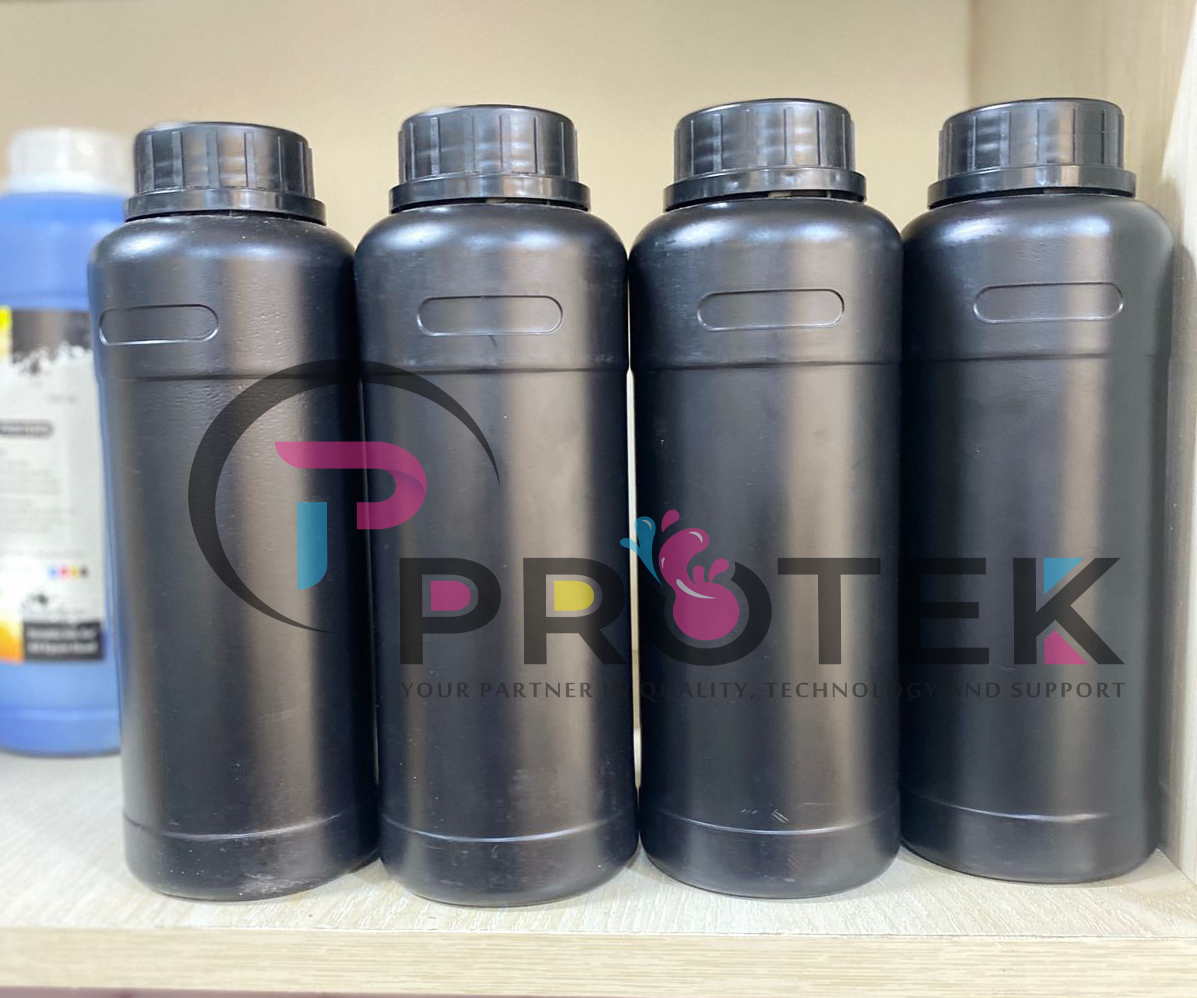
UV DTF (Direct-to-Film) ink is a specialized ultraviolet-curable ink used to create durable, high-definition decals for hard surfaces. The ink is printed onto a special adhesive film, cured instantly with UV light, and then transferred to the final object.
Ink composition and characteristics
UV DTF ink is formulated for instant curing and strong adhesion to non-porous surfaces. It is different from standard DTF inks, which are water-based and used for fabrics.
Key components
- CMYK: Standard cyan, magenta, yellow, and black pigments for full-color printing.
- White ink: Provides a crucial opaque base layer, allowing colors to appear vibrant and accurate on dark or transparent surfaces.
- Varnish/Gloss: A clear coat that is printed on top of the design to provide a glossy, 3D embossed finish. Some printers can also create a matte effect.
- Specialized glue: An adhesive layer is required for the transfer process to ensure the design bonds correctly to the surface.
- Photoinitiators: These chemicals absorb the UV light and trigger the polymerization process, which instantly hardens the liquid ink into a solid layer.
- VOC-free formulation: Many UV DTF inks are formulated to be low-odor and contain minimal volatile organic compounds, making them more environmentally friendly than solvent-based inks.
Performance properties
- Instant curing: The ink dries and hardens immediately under UV light, eliminating the need for a separate drying stage.
- Durability: The cured ink produces a highly resilient print that resists scratches, fading, and water, making it suitable for both indoor and outdoor use.
- Vibrant and detailed prints: Because the ink cures instantly without absorbing into the transfer film, it can produce sharp, high-resolution images with a wide color gamut.
- Excellent adhesion: Formulated to create a strong bond on hard surfaces such as glass, metal, plastic, and wood.
- 3D effects: The layered printing process can produce prints with a raised, tactile, and glossy finish.
Common UV DTF ink types
In addition to the standard formulation, some inks are designed for specific applications.
- Rigid UV ink: Creates a hard, durable decal best suited for flat or gently curved, non-porous surfaces like glass or metal.
- Flexible UV ink: A more pliable formulation that prevents cracking and peeling when applied to bendable or cylindrical items, such as flexible plastic tubes or bottles.
Popular brands of UV DTF ink
- STS Inks (USA): Known for eco-friendly, professional-grade inks and a low-clogging formula. Often chosen for Epson-based printers.
- Kodak (USA): Produces premium inks recognized for high-definition prints, rich colors, and superior durability.
- Nazdar (USA): Offers industrial-grade inks used in a range of printing applications.
- Epson (Japan): Provides high-quality OEM (Original Equipment Manufacturer) inks optimized for its own line of printers.
- Mecolour: Provides affordable UV DTF inks suitable for high-volume printing.
- DuPont Artistri (USA): Known for long-lasting and vibrant prints on various materials.
- Imagebos: Offers a specialized DTF UV ink that is 99.5% VOC-free, compatible with Epson printheads, and designed to minimize clogging.
Considerations for use
To achieve the best results, proper handling and storage of UV DTF ink are essential.
- Storage: Store in a cool, dry, and well-ventilated area away from direct sunlight. The ink’s packaging should be light-blocking, as the ink is light-sensitive.
- Handling: Wear personal protective equipment, such as gloves and safety goggles, when handling the ink.
- Maintenance: To prevent clogging, white UV DTF ink requires regular agitation and proper printer maintenance, as the white pigment is heavier and can settle.
Reviews
There are no reviews yet.