
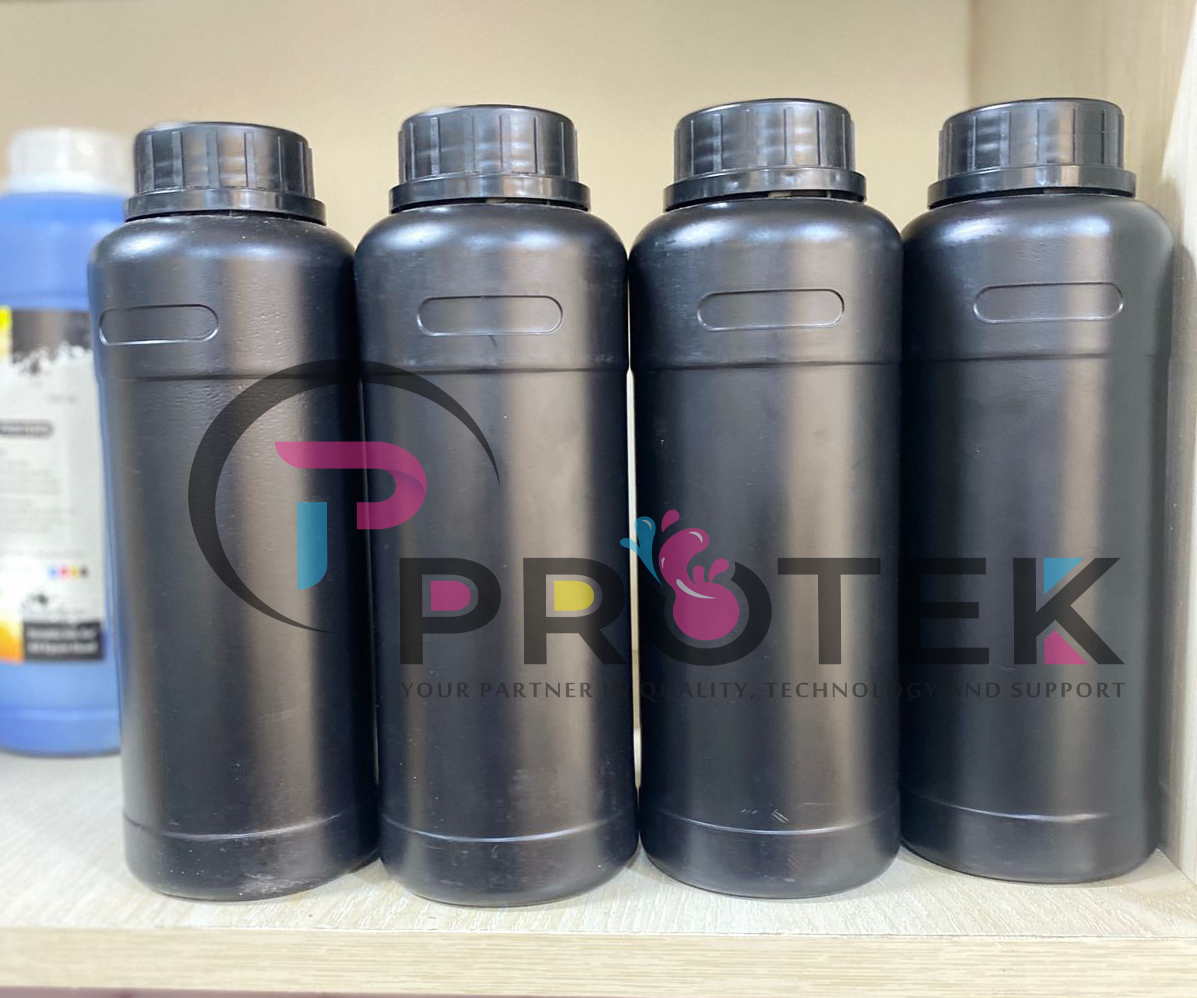
UV hybrid ink combines properties of traditional solvent or oil-based inks with UV-curable inks, offering the best of both printing worlds. A hybrid UV ink can run on conventional presses with minimal modification, then be cured instantly with UV light. It provides excellent adhesion and durability on a wide range of substrates, including flexible and rigid materials.
How UV hybrid ink works
UV hybrid ink is formulated with a mix of UV-curable and non-curable components to create a strong, high-gloss print that can be cured with less UV light than standard UV inks.
- Ink composition: Like other liquid inks, hybrid UV ink contains oligomers, monomers, and pigments, along with photoinitiators that cause it to solidify instantly when exposed to UV light.
- Compatibility: The ink is designed to be compatible with the standard rubber rollers and blankets used on conventional lithographic printing presses. This allows printers to add UV capability to their existing equipment with minimal retrofitting.
- Curing process: After the ink is applied, a UV lamp instantly cures it through a photochemical process, creating a hard, durable finish. This differs from solvent-based inks, which rely on evaporation.
Advantages and disadvantages
| Aspect | Advantages | Disadvantages |
|---|---|---|
| Versatility | Compatible with both flexible (vinyl, canvas) and rigid (acrylic, glass, wood) substrates, and can be used on hybrid printers that accommodate both types. | While compatible with standard press components, it may not perform as well as a dedicated, fully UV-compatible setup. |
| Speed and efficiency | Cures instantly with UV light, eliminating the drying time required by conventional inks. This increases productivity and allows for immediate finishing. | Although faster than conventional inks, the printing speed of UV printers may be slower than traditional, high-volume methods. |
| Durability | Creates a highly durable, scratch-, fade-, water-, and chemical-resistant film on the printed surface. Ideal for both indoor and outdoor use. | Spilled or uncured hybrid UV ink is difficult to clean and can cause skin irritation, requiring operators to use personal protective equipment. |
| Environmental impact | Formulated with fewer volatile organic compounds (VOCs), making it more eco-friendly and safer for indoor environments than traditional solvent-based inks. | The ink itself is toxic before curing and must be handled and disposed of properly to avoid environmental or health issues. |
| Appearance | Produces vibrant colors with a high-gloss finish, creating a crisp, high-quality look. | Under-curing or over-curing can lead to adhesion issues or visual defects, requiring careful optimization of UV settings. |
| Cost | Can be more cost-effective in the long run due to reduced ink waste, lower energy consumption, and faster production speed. | The initial cost for UV hybrid ink and associated curing equipment is higher than for conventional printing. |
Applications
UV hybrid ink is used across various industries for its high-quality, durable, and versatile printing capabilities.
- Signage and displays: Used for both indoor and outdoor signs, banners, and trade show displays due to its vibrant colors and weather resistance.
- Packaging and labels: Applied to packaging prototypes, food and beverage labels, and custom boxes for durable, eye-catching results.
- Promotional products: Prints on a wide range of promotional items, such as mugs, phone cases, and keychains, with scratch-resistant and long-lasting results.
- Interior décor: Creates wall art, decorative wood panels, and custom furniture with durable and vibrant finishes.
- Industrial applications: Used for durable marking, labeling, and graphics on industrial components, glass, metal, and plastic parts.
Reviews
There are no reviews yet.